
In today’s digital world, IP addresses are the unsung heroes of internet connectivity. They act as unique identifiers for devices on a network, helping us communicate and share information across vast distances. Among these numerical sequences lies 158.63.258.200 a string that might seem random but holds significant meaning in the realm of networking. Whether you’re a tech enthusiast or simply curious about how the internet works, understanding IP addresses is essential to navigating our connected lives. Let’s dive into what makes 158.63.258.200 special and unravel the mysteries of IP addressing together!
What is 158.63.258.200?
158.63.258.200 appears to be a standard numerical representation of an IP address, but it’s important to note that it isn’t valid.
IP addresses are made up of four octets, ranging from 0 to 255 each. In this case, the third octet exceeds the maximum limit with “258.” This makes 158.63.258.200 technically incorrect for any networking purpose. Each part of an IP address serves a purpose in identifying devices on a network or over the internet.
Understanding such structures helps clarify how data travels across networks and ensures effective communication between devices. If you encounter similar addresses during your online activities, it’s essential to double-check their validity before proceeding further into configurations or connections.
Types of IP Addresses
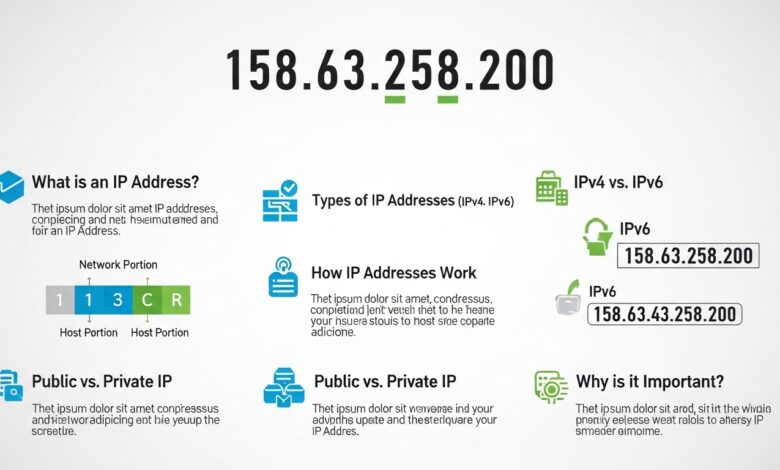
IP addresses fall into two main categories: IPv4 and IPv6. IPv4 is the most common format, using a 32-bit number divided into four octets, each ranging from 0 to 255. This results in over 4 billion unique addresses.
On the other hand, IPv6 was developed to address the shortage of available IPv4 addresses. It uses a much larger address space with a 128-bit configuration, allowing for an astronomical number of potential IPs.
Additionally, there are dynamic and static IP addresses. Dynamic ones change frequently and are assigned by your Internet Service Provider (ISP). Static IPs remain constant; they’re often used for hosting websites or services that require consistent access.
Another classification includes public and private IP addresses. Public ones are accessible over the internet, while private IPs operate within local networks only like those found in homes or businesses. Each type serves its purpose effectively within digital communication systems.
Understanding the Structure of an IP Address
An IP address is formatted as a series of numbers separated by periods. Most commonly, it follows the IPv4 standard, which consists of four octets. Each octet can range from 0 to 255.
For instance, in the address 158.63.258.200, each number represents an eight-bit binary value converted into decimal form. This structure allows for a total of about 4 billion unique addresses within this format.
Each segment serves a purpose; they identify different networks and devices on those networks. The first part typically indicates the network itself, while the last identifies individual devices connected to that network.
Beyond IPv4, there’s also IPv6 designed to accommodate our growing internet needs with its longer alphanumeric sequence and larger capacity for unique addresses. Understanding these structures is crucial for grasping how data travels across the vast expanse of the internet.
How IP Addresses are Assigned
IP addresses are assigned through a structured system managed by organizations like the Internet Assigned Numbers Authority (IANA) and regional registries.
These entities oversee the allocation of IP address blocks to Internet Service Providers (ISPs), ensuring every device connected to the internet has a unique identifier.
When you connect online, your ISP assigns an IP address from its pool, which can be static or dynamic. Static addresses remain constant over time, while dynamic ones change periodically.
This process enables efficient routing of data across networks, allowing users worldwide to communicate seamlessly. Understanding this assignment mechanism is crucial for anyone looking to grasp how digital interactions occur daily.
The concept might seem technical at first glance but plays a fundamental role in maintaining order on the vast expanse of the internet landscape.
The Importance of IP Addresses in Internet Communication
IP addresses play a critical role in how devices communicate over the internet. Each device connected to the web needs a unique identifier, and that’s exactly what an IP address provides.
When you send data online, it travels across various networks. The IP address ensures that this information reaches its intended destination. Without it, your messages would be lost in cyberspace.
Moreover, IP addresses enable essential services like geolocation and content delivery. Websites can tailor content based on user location thanks to these identifiers.
They also facilitate communication between servers and clients. Every request you make is routed through your assigned IP address, ensuring smooth connectivity.
In essence, without proper functioning of IP addresses, the seamless experience we enjoy online would be impossible. They are foundational for all digital interactions we undertake every day.
Common Misconceptions about IP Addresses
Many people believe that an IP address reveals a person’s exact location. While it can provide a general area, it’s not precise enough to pinpoint your home or office.
Another common myth is that dynamic IP addresses are less secure than static ones. In reality, both types have their pros and cons in terms of security; the key lies in how they’re managed.
Some think changing an IP address will completely anonymize them online. This isn’t true—while it may add a layer of privacy, other tracking methods still exist.
Many assume all devices on the internet have unique IP addresses. This isn’t accurate as multiple users can share one public IP through Network Address Translation (NAT), which adds another layer of complexity to understanding networking.
How to Find Your Own IP Address
Finding your own IP address is a straightforward process and can be done in various ways, depending on the device you are using.
If you’re on a Windows computer, simply open the Command Prompt by searching for “cmd” in the Start menu. Type in “ipconfig” and hit Enter. Your IP address will appear next to “IPv4 Address.”
For Mac users, go to System Preferences, then Network. Select your active connection; your IP address will be displayed under “Status.”
Smartphones offer an easy method as well. On iOS devices, navigate to Settings > Wi-Fi and tap on the connected network; your IP will show up there. For Android users, head over to Settings > About Phone > Status or Network.
Knowing how to find your IP easily gives you better control over online privacy and connectivity issues that may arise while browsing the internet.
Protecting Your IP Address from Hackers
To safeguard your IP address from hackers, start by using a reliable virtual private network (VPN). A VPN encrypts your internet connection and masks your real IP address. This makes it difficult for cybercriminals to track your online activities.
Regularly updating your router’s firmware is also crucial. Manufacturers often release updates to patch security vulnerabilities. Ignoring these can leave you exposed.
Additionally, enable a firewall on your devices. Firewalls act as barriers against unauthorized access, filtering out potential threats before they reach you.
Be cautious about sharing personal information online. Limit the data you post on social media or forums, as this can lead to targeted attacks.
Consider using dynamic IP addresses instead of static ones when possible. Dynamic addresses change periodically, making it harder for hackers to pinpoint and target you over time.
Conclusion
Understanding IP addresses is essential in today’s digital world. The address 158.63.258.200, while seemingly just a series of numbers, represents an important aspect of internet communication and connectivity.
As you navigate the web, knowing how IP addresses function can help demystify your online experience. From recognizing different types to understanding their structure and assignment methods, each element plays a unique role in data transmission.
It’s crucial to clear up common misconceptions about IP addresses as they often lead to confusion among users. By learning how to find your own IP address and implementing protective measures against potential threats from hackers, you’re taking significant steps towards enhancing your online security.
The importance of being informed about these numerical identifiers cannot be overstated they are fundamental for anyone who uses the internet regularly or runs an online business.
With this knowledge at hand, you’ll feel more confident navigating the vast expanse of the digital landscape that relies on these critical components for seamless interaction and communication.